Sept-Îles weather in March
In March, Sept-Îles sees average daytime highs of -2°C and overnight lows near -11°C, with 75 mm of precipitation across 10.3 wet days and about 11.5 hours of daylight. It is the 9th-warmest and 10th-wettest month of the year here.
Highs climb over the month, from about -5°C in the first days to 1°C by the end. The sky is clear or mostly clear about 28% of the time in March, and the air most often feels dry.
Daylight stretches from about 10 h 36 min at the start of March to 12 h 30 min by month's end. Set against the rest of the year, March is Sept-Îles's 4th-clearest and 3rd-windiest month. For the whole year in context, see Sept-Îles's year-round climate.
- Daytime high
- -2°
- 9th warmest
- Overnight low
- -11°
- 4th coldest
- Precipitation
- 75 mm
- 10.3 wet days
- Daylight
- 11 h 30 min
- 5:49 AM – 5:21 PM
- Cloud cover
- 63%
- 4th clearest
- Wind
- 14 km/h
- 3rd windiest
- Solar energy
- 3.71 kWh/m²
- Travel score
- 0.0
- out of 10
Sept-Îles is city in Quebec, Canada.
- Density
- 13/km²
- people per km²
- Founded
- 2003
Air quality: WHO Ambient Air Quality Database. Density & description: Wikidata (CC0), GeoNames.
Temperature in March
Highs climb over the month, from about -5°C in the first days to 1°C by the end.
A typical March day in Sept-Îles reaches about -2°C in the afternoon and slips back to -11°C overnight — a 9°C spread between the day's warmth and the night's chill. On most days the high lands between -9°C and 4°C. Set against its neighbours, March runs about 6°C warmer than February and about 7°C cooler than April.
| 1 | 2 | 3 | 4 | 5 | 6 | 7 | 8 | 9 | 10 | 11 | 12 | 13 | 14 | 15 | 16 | 17 | 18 | 19 | 20 | 21 | 22 | 23 | 24 | 25 | 26 | 27 | 28 | 29 | 30 | 31 | |
|---|---|---|---|---|---|---|---|---|---|---|---|---|---|---|---|---|---|---|---|---|---|---|---|---|---|---|---|---|---|---|---|
| Avg high (°C) | -5 | -5 | -5 | -5 | -5 | -5 | -4 | -4 | -4 | -4 | -4 | -3 | -3 | -3 | -3 | -2 | -2 | -2 | -2 | -1 | -1 | -1 | 0 | 0 | 0 | 0 | 0 | 1 | 1 | 1 | 1 |
| Avg low (°C) | -15 | -15 | -14 | -14 | -14 | -14 | -14 | -14 | -13 | -13 | -13 | -13 | -12 | -12 | -12 | -12 | -11 | -11 | -11 | -10 | -10 | -10 | -10 | -9 | -9 | -9 | -8 | -8 | -8 | -7 | -7 |
| Avg high (°C) | Avg low (°C) | |
|---|---|---|
| 1 | -5 | -15 |
| 2 | -5 | -15 |
| 3 | -5 | -14 |
| 4 | -5 | -14 |
| 5 | -5 | -14 |
| 6 | -5 | -14 |
| 7 | -4 | -14 |
| 8 | -4 | -14 |
| 9 | -4 | -13 |
| 10 | -4 | -13 |
| 11 | -4 | -13 |
| 12 | -3 | -13 |
| 13 | -3 | -12 |
| 14 | -3 | -12 |
| 15 | -3 | -12 |
| 16 | -2 | -12 |
| 17 | -2 | -11 |
| 18 | -2 | -11 |
| 19 | -2 | -11 |
| 20 | -1 | -10 |
| 21 | -1 | -10 |
| 22 | -1 | -10 |
| 23 | 0 | -10 |
| 24 | 0 | -9 |
| 25 | 0 | -9 |
| 26 | 0 | -9 |
| 27 | 0 | -8 |
| 28 | 1 | -8 |
| 29 | 1 | -8 |
| 30 | 1 | -7 |
| 31 | 1 | -7 |
How March really feels in Sept-Îles
Once humidity and wind are folded in, March averages 0 days that feel above 32°C and 31 that feel at or below 0°C — the comfort signal a plain temperature reading hides.
The story in March is cold — wind chill drags the overnight "feels like" below the raw low.
Sept-Îles weather by month
How March compares with the rest of the year at a glance. March is the 9th-warmest and 10th-wettest month here — the current month is highlighted below.
| Month | High / Low (°C) | Rainfall (mm) | Wet days | Snow days | Daylight (hours) | Travel score |
|---|---|---|---|---|---|---|
| Jan | -10° / -19° | 69 | 10.4 | 11.1 | 8.3 | 0.0 |
| Feb | -8° / -18° | 54 | 8.7 | 9.3 | 9.7 | 0.0 |
| Mar | -2° / -11° | 75 | 10.3 | 10.2 | 11.5 | 0.0 |
| Apr | 4° / -4° | 82 | 10.6 | 7.8 | 13.5 | 0.2 |
| May | 12° / 2° | 85 | 11.4 | 1.9 | 15.2 | 2.8 |
| Jun | 18° / 9° | 81 | 11.6 | 0 | 16.1 | 5.4 |
| Jul | 21° / 12° | 102 | 13.5 | 0 | 15.7 | 5.8 |
| Aug | 20° / 11° | 93 | 12.4 | 0 | 14.3 | 5.9 |
| Sep | 15° / 7° | 103 | 12.2 | 0.1 | 12.4 | 4.3 |
| Oct | 8° / 1° | 113 | 12.4 | 2.8 | 10.5 | 1.3 |
| Nov | 1° / -6° | 103 | 12.2 | 8.6 | 8.8 | 0.0 |
| Dec | -6° / -14° | 95 | 11.6 | 12 | 7.9 | 0.0 |
Cloud cover in March
The sky is clear or mostly clear about 28% of the time in March.
Beyond those clear spells, partly cloudy skies cover about 11% of March, with mostly cloudy or overcast conditions the remaining 60%.
| 1 | 2 | 3 | 4 | 5 | 6 | 7 | 8 | 9 | 10 | 11 | 12 | 13 | 14 | 15 | 16 | 17 | 18 | 19 | 20 | 21 | 22 | 23 | 24 | 25 | 26 | 27 | 28 | 29 | 30 | 31 | |
|---|---|---|---|---|---|---|---|---|---|---|---|---|---|---|---|---|---|---|---|---|---|---|---|---|---|---|---|---|---|---|---|
| Clearer (%) | 41 | 41 | 40 | 40 | 40 | 39 | 39 | 39 | 40 | 40 | 40 | 40 | 40 | 40 | 40 | 40 | 40 | 40 | 40 | 40 | 40 | 40 | 40 | 40 | 39 | 39 | 39 | 38 | 38 | 38 | 37 |
| Cloudier (%) | 59 | 59 | 60 | 60 | 60 | 61 | 61 | 61 | 60 | 60 | 60 | 60 | 60 | 60 | 60 | 60 | 60 | 60 | 60 | 60 | 60 | 60 | 60 | 60 | 61 | 61 | 61 | 62 | 62 | 62 | 63 |
| Clearer (%) | Cloudier (%) | |
|---|---|---|
| 1 | 41 | 59 |
| 2 | 41 | 59 |
| 3 | 40 | 60 |
| 4 | 40 | 60 |
| 5 | 40 | 60 |
| 6 | 39 | 61 |
| 7 | 39 | 61 |
| 8 | 39 | 61 |
| 9 | 40 | 60 |
| 10 | 40 | 60 |
| 11 | 40 | 60 |
| 12 | 40 | 60 |
| 13 | 40 | 60 |
| 14 | 40 | 60 |
| 15 | 40 | 60 |
| 16 | 40 | 60 |
| 17 | 40 | 60 |
| 18 | 40 | 60 |
| 19 | 40 | 60 |
| 20 | 40 | 60 |
| 21 | 40 | 60 |
| 22 | 40 | 60 |
| 23 | 40 | 60 |
| 24 | 40 | 60 |
| 25 | 39 | 61 |
| 26 | 39 | 61 |
| 27 | 39 | 61 |
| 28 | 38 | 62 |
| 29 | 38 | 62 |
| 30 | 38 | 62 |
| 31 | 37 | 63 |
Chance of precipitation in March
Sept-Îles gets around 75 mm of rain and snow over 10.3 wet days in March. The line is the day-by-day chance of measurable precipitation.
Day to day, the chance of measurable precipitation averages around 33% and peaks near 35% on the wettest days, and about 10 days bring snow.
| 1 | 2 | 3 | 4 | 5 | 6 | 7 | 8 | 9 | 10 | 11 | 12 | 13 | 14 | 15 | 16 | 17 | 18 | 19 | 20 | 21 | 22 | 23 | 24 | 25 | 26 | 27 | 28 | 29 | 30 | 31 | |
|---|---|---|---|---|---|---|---|---|---|---|---|---|---|---|---|---|---|---|---|---|---|---|---|---|---|---|---|---|---|---|---|
| Rain chance (%) | 35 | 35 | 35 | 35 | 35 | 35 | 35 | 35 | 34 | 34 | 34 | 33 | 33 | 33 | 33 | 33 | 33 | 33 | 32 | 32 | 32 | 32 | 32 | 32 | 32 | 32 | 32 | 32 | 33 | 33 | 33 |
| Snow chance (%) | 35 | 35 | 34 | 34 | 34 | 34 | 34 | 34 | 34 | 33 | 33 | 33 | 33 | 33 | 33 | 33 | 33 | 33 | 33 | 32 | 32 | 31 | 31 | 31 | 31 | 31 | 31 | 31 | 31 | 31 | 31 |
| Rain chance (%) | Snow chance (%) | |
|---|---|---|
| 1 | 35 | 35 |
| 2 | 35 | 35 |
| 3 | 35 | 34 |
| 4 | 35 | 34 |
| 5 | 35 | 34 |
| 6 | 35 | 34 |
| 7 | 35 | 34 |
| 8 | 35 | 34 |
| 9 | 34 | 34 |
| 10 | 34 | 33 |
| 11 | 34 | 33 |
| 12 | 33 | 33 |
| 13 | 33 | 33 |
| 14 | 33 | 33 |
| 15 | 33 | 33 |
| 16 | 33 | 33 |
| 17 | 33 | 33 |
| 18 | 33 | 33 |
| 19 | 32 | 33 |
| 20 | 32 | 32 |
| 21 | 32 | 32 |
| 22 | 32 | 31 |
| 23 | 32 | 31 |
| 24 | 32 | 31 |
| 25 | 32 | 31 |
| 26 | 32 | 31 |
| 27 | 32 | 31 |
| 28 | 32 | 31 |
| 29 | 33 | 31 |
| 30 | 33 | 31 |
| 31 | 33 | 31 |
Humidity in March
Most of March feels dry — the stacked bands show each day's mix of comfort levels, read off the dew point.
By dew point, March lands in the dry band about 100% of days. It rarely turns muggy — the humid and sticky bands barely register.
| 1 | 2 | 3 | 4 | 5 | 6 | 7 | 8 | 9 | 10 | 11 | 12 | 13 | 14 | 15 | 16 | 17 | 18 | 19 | 20 | 21 | 22 | 23 | 24 | 25 | 26 | 27 | 28 | 29 | 30 | 31 | |
|---|---|---|---|---|---|---|---|---|---|---|---|---|---|---|---|---|---|---|---|---|---|---|---|---|---|---|---|---|---|---|---|
| Dry (%) | 100 | 100 | 100 | 100 | 100 | 100 | 100 | 100 | 100 | 100 | 100 | 100 | 100 | 100 | 100 | 100 | 100 | 100 | 100 | 100 | 100 | 100 | 100 | 100 | 100 | 100 | 100 | 100 | 100 | 100 | 100 |
| Dry (%) | |
|---|---|
| 1 | 100 |
| 2 | 100 |
| 3 | 100 |
| 4 | 100 |
| 5 | 100 |
| 6 | 100 |
| 7 | 100 |
| 8 | 100 |
| 9 | 100 |
| 10 | 100 |
| 11 | 100 |
| 12 | 100 |
| 13 | 100 |
| 14 | 100 |
| 15 | 100 |
| 16 | 100 |
| 17 | 100 |
| 18 | 100 |
| 19 | 100 |
| 20 | 100 |
| 21 | 100 |
| 22 | 100 |
| 23 | 100 |
| 24 | 100 |
| 25 | 100 |
| 26 | 100 |
| 27 | 100 |
| 28 | 100 |
| 29 | 100 |
| 30 | 100 |
| 31 | 100 |
Wind in March
Winds average 14 km/h in March.
Across March, daily wind ranges from about 14 km/h on the calmest days to 14 km/h at its breeziest. It stays fairly steady from day to day.
| 1 | 2 | 3 | 4 | 5 | 6 | 7 | 8 | 9 | 10 | 11 | 12 | 13 | 14 | 15 | 16 | 17 | 18 | 19 | 20 | 21 | 22 | 23 | 24 | 25 | 26 | 27 | 28 | 29 | 30 | 31 | |
|---|---|---|---|---|---|---|---|---|---|---|---|---|---|---|---|---|---|---|---|---|---|---|---|---|---|---|---|---|---|---|---|
| Wind speed (km/h) | 14 | 14 | 14 | 14 | 14 | 14 | 14 | 14 | 14 | 14 | 14 | 14 | 14 | 14 | 14 | 14 | 14 | 14 | 14 | 14 | 14 | 14 | 14 | 14 | 14 | 14 | 14 | 14 | 14 | 14 | 14 |
| Feels | light breeze | light breeze | light breeze | light breeze | light breeze | light breeze | light breeze | light breeze | light breeze | light breeze | light breeze | light breeze | light breeze | light breeze | light breeze | light breeze | light breeze | light breeze | light breeze | light breeze | light breeze | light breeze | light breeze | light breeze | light breeze | light breeze | light breeze | light breeze | light breeze | light breeze | light breeze |
| Wind speed (km/h) | Feels | |
|---|---|---|
| 1 | 14 | light breeze |
| 2 | 14 | light breeze |
| 3 | 14 | light breeze |
| 4 | 14 | light breeze |
| 5 | 14 | light breeze |
| 6 | 14 | light breeze |
| 7 | 14 | light breeze |
| 8 | 14 | light breeze |
| 9 | 14 | light breeze |
| 10 | 14 | light breeze |
| 11 | 14 | light breeze |
| 12 | 14 | light breeze |
| 13 | 14 | light breeze |
| 14 | 14 | light breeze |
| 15 | 14 | light breeze |
| 16 | 14 | light breeze |
| 17 | 14 | light breeze |
| 18 | 14 | light breeze |
| 19 | 14 | light breeze |
| 20 | 14 | light breeze |
| 21 | 14 | light breeze |
| 22 | 14 | light breeze |
| 23 | 14 | light breeze |
| 24 | 14 | light breeze |
| 25 | 14 | light breeze |
| 26 | 14 | light breeze |
| 27 | 14 | light breeze |
| 28 | 14 | light breeze |
| 29 | 14 | light breeze |
| 30 | 14 | light breeze |
| 31 | 14 | light breeze |
Sunrise & sunset in March
Daylight runs from about 10 h 36 min at the start of March to 12 h 30 min by month's end. The lit band spans sunrise to sunset each day.
Days grow by about 114 minutes over March. Sunrise moves from 6:21 AM to 5:16 AM, and sunset from 4:56 PM to 5:45 PM.
| 1 | 2 | 3 | 4 | 5 | 6 | 7 | 8 | 9 | 10 | 11 | 12 | 13 | 14 | 15 | 16 | 17 | 18 | 19 | 20 | 21 | 22 | 23 | 24 | 25 | 26 | 27 | 28 | 29 | 30 | 31 | |
|---|---|---|---|---|---|---|---|---|---|---|---|---|---|---|---|---|---|---|---|---|---|---|---|---|---|---|---|---|---|---|---|
| Daylight (h) | 10.6 | 10.6 | 10.7 | 10.8 | 10.8 | 10.9 | 11.0 | 11.0 | 11.1 | 11.1 | 11.2 | 11.3 | 11.3 | 11.4 | 11.5 | 11.5 | 11.6 | 11.7 | 11.7 | 11.8 | 11.9 | 11.9 | 12.0 | 12.0 | 12.1 | 12.2 | 12.2 | 12.3 | 12.4 | 12.4 | 12.5 |
| Sunrise (AM) | 6:21 | 6:19 | 6:17 | 6:15 | 6:13 | 6:11 | 6:09 | 6:07 | 6:05 | 6:02 | 6:00 | 5:58 | 5:56 | 5:54 | 5:51 | 5:49 | 5:47 | 5:45 | 5:43 | 5:40 | 5:38 | 5:36 | 5:34 | 5:31 | 5:29 | 5:27 | 5:25 | 5:22 | 5:20 | 5:18 | 5:16 |
| Sunset (PM) | 4:56 | 4:58 | 5:00 | 5:01 | 5:03 | 5:05 | 5:06 | 5:08 | 5:10 | 5:11 | 5:13 | 5:15 | 5:16 | 5:18 | 5:20 | 5:21 | 5:23 | 5:24 | 5:26 | 5:28 | 5:29 | 5:31 | 5:33 | 5:34 | 5:36 | 5:37 | 5:39 | 5:41 | 5:42 | 5:44 | 5:45 |
| Daylight (h) | Sunrise (AM) | Sunset (PM) | |
|---|---|---|---|
| 1 | 10.6 | 6:21 | 4:56 |
| 2 | 10.6 | 6:19 | 4:58 |
| 3 | 10.7 | 6:17 | 5:00 |
| 4 | 10.8 | 6:15 | 5:01 |
| 5 | 10.8 | 6:13 | 5:03 |
| 6 | 10.9 | 6:11 | 5:05 |
| 7 | 11.0 | 6:09 | 5:06 |
| 8 | 11.0 | 6:07 | 5:08 |
| 9 | 11.1 | 6:05 | 5:10 |
| 10 | 11.1 | 6:02 | 5:11 |
| 11 | 11.2 | 6:00 | 5:13 |
| 12 | 11.3 | 5:58 | 5:15 |
| 13 | 11.3 | 5:56 | 5:16 |
| 14 | 11.4 | 5:54 | 5:18 |
| 15 | 11.5 | 5:51 | 5:20 |
| 16 | 11.5 | 5:49 | 5:21 |
| 17 | 11.6 | 5:47 | 5:23 |
| 18 | 11.7 | 5:45 | 5:24 |
| 19 | 11.7 | 5:43 | 5:26 |
| 20 | 11.8 | 5:40 | 5:28 |
| 21 | 11.9 | 5:38 | 5:29 |
| 22 | 11.9 | 5:36 | 5:31 |
| 23 | 12.0 | 5:34 | 5:33 |
| 24 | 12.0 | 5:31 | 5:34 |
| 25 | 12.1 | 5:29 | 5:36 |
| 26 | 12.2 | 5:27 | 5:37 |
| 27 | 12.2 | 5:25 | 5:39 |
| 28 | 12.3 | 5:22 | 5:41 |
| 29 | 12.4 | 5:20 | 5:42 |
| 30 | 12.4 | 5:18 | 5:44 |
| 31 | 12.5 | 5:16 | 5:45 |
Solar energy in March
Average shortwave solar energy reaching the ground each day in March, about 3.71 kWh/m².
For context, solar energy here swings from a low near 0.98 kWh/m² to a high of 5.75 kWh/m² in June across the year — March's 3.71 kWh/m² falls in the middle.
| 1 | 2 | 3 | 4 | 5 | 6 | 7 | 8 | 9 | 10 | 11 | 12 | 13 | 14 | 15 | 16 | 17 | 18 | 19 | 20 | 21 | 22 | 23 | 24 | 25 | 26 | 27 | 28 | 29 | 30 | 31 | |
|---|---|---|---|---|---|---|---|---|---|---|---|---|---|---|---|---|---|---|---|---|---|---|---|---|---|---|---|---|---|---|---|
| Solar energy (kWh/m²) | 2.9 | 3.0 | 3.0 | 3.1 | 3.1 | 3.2 | 3.2 | 3.3 | 3.3 | 3.4 | 3.4 | 3.5 | 3.5 | 3.6 | 3.6 | 3.7 | 3.8 | 3.8 | 3.9 | 3.9 | 4.0 | 4.0 | 4.1 | 4.1 | 4.2 | 4.2 | 4.2 | 4.3 | 4.3 | 4.3 | 4.4 |
| Level | Moderate | Moderate | Moderate | Moderate | Moderate | Moderate | Moderate | Moderate | Moderate | Moderate | Moderate | Moderate | Moderate | Moderate | Moderate | Moderate | Moderate | Moderate | Moderate | Moderate | Moderate | Bright | Bright | Bright | Bright | Bright | Bright | Bright | Bright | Bright | Bright |
| Solar energy (kWh/m²) | Level | |
|---|---|---|
| 1 | 2.9 | Moderate |
| 2 | 3.0 | Moderate |
| 3 | 3.0 | Moderate |
| 4 | 3.1 | Moderate |
| 5 | 3.1 | Moderate |
| 6 | 3.2 | Moderate |
| 7 | 3.2 | Moderate |
| 8 | 3.3 | Moderate |
| 9 | 3.3 | Moderate |
| 10 | 3.4 | Moderate |
| 11 | 3.4 | Moderate |
| 12 | 3.5 | Moderate |
| 13 | 3.5 | Moderate |
| 14 | 3.6 | Moderate |
| 15 | 3.6 | Moderate |
| 16 | 3.7 | Moderate |
| 17 | 3.8 | Moderate |
| 18 | 3.8 | Moderate |
| 19 | 3.9 | Moderate |
| 20 | 3.9 | Moderate |
| 21 | 4.0 | Moderate |
| 22 | 4.0 | Bright |
| 23 | 4.1 | Bright |
| 24 | 4.1 | Bright |
| 25 | 4.2 | Bright |
| 26 | 4.2 | Bright |
| 27 | 4.2 | Bright |
| 28 | 4.3 | Bright |
| 29 | 4.3 | Bright |
| 30 | 4.3 | Bright |
| 31 | 4.4 | Bright |
Is March a good time to visit Sept-Îles?
Our two travel scores rate March for general sightseeing and for beach or pool weather — 0 (poor) to 10 (ideal).
March is a weaker month for outdoor sightseeing in Sept-Îles.
What to pack for Sept-Îles in March
From March's temperature range, rain chance, sun and wind — what's worth putting in the bag.
In March, Sept-Îles sees daytime highs around -2°C and nights near -11°C. Pack a warm layer and a heavy coat. Worth having: rain gear. About 10 days see rain.
Sea temperature near Sept-Îles in March
The nearest coast averages about -1°C in March — the other half of the beach question. The full-year curve and swim-comfort zones are below.
The sea offshore is warmest in August at about 14°C and coldest in February near -1°C.
The water stays below 20°C all year — cool enough that most swimmers want a wetsuit.
| Jan | Feb | Mar | Apr | May | Jun | Jul | Aug | Sep | Oct | Nov | Dec | |
|---|---|---|---|---|---|---|---|---|---|---|---|---|
| Sea temperature (°C) | 0 | 0 | 0 | 1 | 5 | 10 | 14 | 14 | 11 | 7 | 4 | 1 |
| Comfort | Bracing | Bracing | Bracing | Bracing | Bracing | Bracing | Bracing | Bracing | Bracing | Bracing | Bracing | Bracing |
| Sea temperature (°C) | Comfort | |
|---|---|---|
| Jan | 0 | Bracing |
| Feb | 0 | Bracing |
| Mar | 0 | Bracing |
| Apr | 1 | Bracing |
| May | 5 | Bracing |
| Jun | 10 | Bracing |
| Jul | 14 | Bracing |
| Aug | 14 | Bracing |
| Sep | 11 | Bracing |
| Oct | 7 | Bracing |
| Nov | 4 | Bracing |
| Dec | 1 | Bracing |
UV index in Sept-Îles in March
Clear-sky midday UV in March peaks around 3. The full-year curve, shaded by WHO exposure level, is below.
Under clear skies, the midday UV index in Sept-Îles peaks around July 9 at about 6 (high) — a little sun protection helps at midday. It bottoms out near January 1 at about 1 (low).
The index reaches 3 or more — the level where the WHO recommends sun protection — in 5 months of the year.
| Jan | Feb | Mar | Apr | May | Jun | Jul | Aug | Sep | Oct | Nov | Dec | |
|---|---|---|---|---|---|---|---|---|---|---|---|---|
| UV index (midday) | 1 | 2 | 3 | 4 | 5 | 6 | 6 | 2 | 4 | 2 | 1 | 1 |
| Level | Low | Low | Moderate | Moderate | Moderate | High | High | Low | Moderate | Low | Low | Low |
| UV index (midday) | Level | |
|---|---|---|
| Jan | 1 | Low |
| Feb | 2 | Low |
| Mar | 3 | Moderate |
| Apr | 4 | Moderate |
| May | 5 | Moderate |
| Jun | 6 | High |
| Jul | 6 | High |
| Aug | 2 | Low |
| Sep | 4 | Moderate |
| Oct | 2 | Low |
| Nov | 1 | Low |
| Dec | 1 | Low |
Air quality in Sept-Îles in March
Average fine-particle pollution (PM2.5) through the year — so you can see where March falls, not just the annual average.
Air quality in Sept-Îles is worst in June — around 24 µg/m³ PM2.5 (moderate), about 15.2× the cleanest month (December, 2 µg/m³).
Modeled monthly averages (CAMS reanalysis, 2015–2024).
| Jan | Feb | Mar | Apr | May | Jun | Jul | Aug | Sep | Oct | Nov | Dec | |
|---|---|---|---|---|---|---|---|---|---|---|---|---|
| PM2.5 (µg/m³) | 2 | 4 | 7 | 7 | 10 | 24 | 9 | 9 | 6 | 3 | 2 | 2 |
| Level | Good | Good | Good | Good | Good | Moderate | Good | Good | Good | Good | Good | Good |
| PM2.5 (µg/m³) | Level | |
|---|---|---|
| Jan | 2 | Good |
| Feb | 4 | Good |
| Mar | 7 | Good |
| Apr | 7 | Good |
| May | 10 | Good |
| Jun | 24 | Moderate |
| Jul | 9 | Good |
| Aug | 9 | Good |
| Sep | 6 | Good |
| Oct | 3 | Good |
| Nov | 2 | Good |
| Dec | 2 | Good |
Where is Sept-Îles?
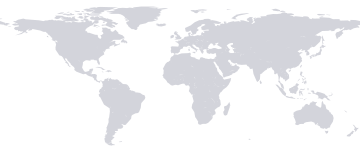
Sept-Îles sits at 50.2°N, 66.4°W, 5 m above sea level, in Canada. The nearest listed city is Baie-Comeau, 168 km away.
Topography around Sept-Îles
How much the land rises and falls, and what covers it, within 3, 16 and 80 km of Sept-Îles.
Within 3 km, the terrain around Sept-Îles has only modest variations in elevation — a maximum elevation change of 42 m around an average of 6 m above sea level; within 16 km, significant variations in elevation — a maximum elevation change of 370 m; within 80 km, large variations in elevation — a maximum elevation change of 1,000 m.
The land around Sept-Îles is covered by water (54%) and artificial surfaces (22%) within 3 km, water (52%) and trees (38%) within 16 km, and trees (64%) and water (33%) within 80 km.
Canada travel facts
- Travel advisory
- Level 1
- Exercise Normal Precautions
- Power plugs
- Type A / B
- 120 V · 60 Hz
- Prices
- ≈ 83% of US
- price level, 2025
- GDP per capita
- $55,698
- 2025
- Happiness
- 6.7 / 10
- World Happiness, 2025
- Safe drinking water
- 97%
- of population, 2024
- Homicide rate
- 2
- per 100k, 2023
- Road deaths
- 5.3
- per 100k/yr, 2019
- Income group
- High
- World Bank
- Religion
Sources: World Bank, US State Department, World Happiness Report, WHO/UNICEF, EF EPI, CIA World Factbook.
Data sources
Temperature, precipitation, cloud, humidity, wind and solar figures are a 1991–2020 climatology for Sept-Îles (50.2001°, -66.3821°, elevation 5 m), computed from hourly ERA5 reanalysis — contains modified Copernicus Climate Change Service information. Sun figures are astronomical calculations, not observations. City data © GeoNames, CC BY 4.0. Map outlines from Natural Earth (public domain); interactive map © Google. Sea temperatures are the NOAA OISST v2.1 1991–2020 monthly climatology (public domain), sampled at the nearest ocean point. UV index is derived from CAMS (Copernicus Atmosphere Monitoring Service) clear-sky UV data — contains modified Copernicus Atmosphere Monitoring Service information. Monthly air-quality (PM2.5) seasonality is from the CAMS EAC4 reanalysis (Copernicus Atmosphere Monitoring Service), scaled to the WHO annual mean where available. Topography is sampled from the Copernicus DEM GLO-90 elevation model (© ESA/Airbus) and ESA WorldCover 2021 land cover (CC BY 4.0).