Hachinohe weather in February
In February, Hachinohe sees average daytime highs of 3°C and overnight lows near -4°C, with 47 mm of precipitation across 7.4 wet days and about 10.4 hours of daylight. It is the 11th-warmest and 11th-wettest month of the year here.
Highs climb over the month, from about 2°C in the first days to 4°C by the end. The sky is clear or mostly clear about 21% of the time in February, and the air most often feels dry.
Daylight stretches from about 9 h 54 min at the start of February to 10 h 54 min by month's end. Set against the rest of the year, February is Hachinohe's 6th-clearest and 3rd-windiest month. For the whole year in context, see Hachinohe's year-round climate.
- Daytime high
- 3°
- 11th warmest
- Overnight low
- -4°
- 2nd coldest
- Precipitation
- 47 mm
- 7.4 wet days
- Daylight
- 10 h 24 min
- 6:37 AM – 5:01 PM
- Cloud cover
- 62%
- 6th clearest
- Wind
- 16 km/h
- 3rd windiest
- Solar energy
- 3.2 kWh/m²
- Travel score
- 0.0
- out of 10
Temperature in February
Highs climb over the month, from about 2°C in the first days to 4°C by the end.
A typical February day in Hachinohe reaches about 3°C in the afternoon and slips back to -4°C overnight — a 7°C spread between the day's warmth and the night's chill. On most days the high lands between -1°C and 7°C. Set against its neighbours, February runs about 1°C warmer than January and about 4°C cooler than March.
| 1 | 2 | 3 | 4 | 5 | 6 | 7 | 8 | 9 | 10 | 11 | 12 | 13 | 14 | 15 | 16 | 17 | 18 | 19 | 20 | 21 | 22 | 23 | 24 | 25 | 26 | 27 | 28 | |
|---|---|---|---|---|---|---|---|---|---|---|---|---|---|---|---|---|---|---|---|---|---|---|---|---|---|---|---|---|
| Avg high (°C) | 2 | 2 | 2 | 2 | 2 | 2 | 2 | 2 | 2 | 2 | 2 | 3 | 3 | 3 | 3 | 3 | 3 | 3 | 3 | 3 | 4 | 4 | 4 | 4 | 4 | 4 | 4 | 5 |
| Avg low (°C) | -5 | -5 | -5 | -4 | -4 | -4 | -4 | -4 | -4 | -4 | -4 | -4 | -4 | -4 | -4 | -4 | -4 | -4 | -4 | -4 | -3 | -3 | -3 | -3 | -3 | -3 | -3 | -3 |
| Avg high (°C) | Avg low (°C) | |
|---|---|---|
| 1 | 2 | -5 |
| 2 | 2 | -5 |
| 3 | 2 | -5 |
| 4 | 2 | -4 |
| 5 | 2 | -4 |
| 6 | 2 | -4 |
| 7 | 2 | -4 |
| 8 | 2 | -4 |
| 9 | 2 | -4 |
| 10 | 2 | -4 |
| 11 | 2 | -4 |
| 12 | 3 | -4 |
| 13 | 3 | -4 |
| 14 | 3 | -4 |
| 15 | 3 | -4 |
| 16 | 3 | -4 |
| 17 | 3 | -4 |
| 18 | 3 | -4 |
| 19 | 3 | -4 |
| 20 | 3 | -4 |
| 21 | 4 | -3 |
| 22 | 4 | -3 |
| 23 | 4 | -3 |
| 24 | 4 | -3 |
| 25 | 4 | -3 |
| 26 | 4 | -3 |
| 27 | 4 | -3 |
| 28 | 5 | -3 |
How February really feels in Hachinohe
Once humidity and wind are folded in, February averages 0 days that feel above 32°C and 28 that feel at or below 0°C — the comfort signal a plain temperature reading hides.
The story in February is cold — wind chill drags the overnight "feels like" below the raw low.
Hachinohe weather by month
How February compares with the rest of the year at a glance. February is the 11th-warmest and 11th-wettest month here — the current month is highlighted below.
| Month | High / Low (°C) | Rainfall (mm) | Wet days | Snow days | Daylight (hours) | Travel score |
|---|---|---|---|---|---|---|
| Jan | 2° / -4° | 45 | 7.3 | 6.3 | 9.4 | 0.0 |
| Feb | 3° / -4° | 47 | 7.4 | 6.3 | 10.4 | 0.0 |
| Mar | 7° / -0° | 72 | 10.7 | 5.5 | 11.7 | 1.0 |
| Apr | 14° / 5° | 78 | 11.9 | 1.5 | 13 | 3.7 |
| May | 18° / 11° | 88 | 11.4 | 0 | 14.2 | 5.7 |
| Jun | 21° / 15° | 91 | 10.7 | 0 | 14.8 | 6.1 |
| Jul | 25° / 19° | 132 | 13.4 | 0 | 14.6 | 6.0 |
| Aug | 27° / 20° | 132 | 13 | 0 | 13.6 | 6.0 |
| Sep | 24° / 16° | 127 | 11.2 | 0 | 12.3 | 6.3 |
| Oct | 18° / 10° | 102 | 9.3 | 0 | 10.9 | 5.8 |
| Nov | 11° / 4° | 54 | 9 | 1 | 9.7 | 2.9 |
| Dec | 5° / -1° | 50 | 8 | 3.8 | 9.2 | 0.2 |
Cloud cover in February
The sky is clear or mostly clear about 21% of the time in February.
Beyond those clear spells, partly cloudy skies cover about 27% of February, with mostly cloudy or overcast conditions the remaining 52%.
| 1 | 2 | 3 | 4 | 5 | 6 | 7 | 8 | 9 | 10 | 11 | 12 | 13 | 14 | 15 | 16 | 17 | 18 | 19 | 20 | 21 | 22 | 23 | 24 | 25 | 26 | 27 | 28 | |
|---|---|---|---|---|---|---|---|---|---|---|---|---|---|---|---|---|---|---|---|---|---|---|---|---|---|---|---|---|
| Clearer (%) | 51 | 51 | 50 | 49 | 49 | 49 | 49 | 48 | 48 | 48 | 47 | 48 | 49 | 49 | 49 | 48 | 48 | 49 | 49 | 48 | 49 | 48 | 48 | 48 | 47 | 47 | 46 | 46 |
| Cloudier (%) | 49 | 49 | 50 | 51 | 51 | 51 | 51 | 52 | 52 | 52 | 53 | 52 | 51 | 51 | 51 | 52 | 52 | 51 | 51 | 52 | 51 | 52 | 52 | 52 | 53 | 53 | 54 | 54 |
| Clearer (%) | Cloudier (%) | |
|---|---|---|
| 1 | 51 | 49 |
| 2 | 51 | 49 |
| 3 | 50 | 50 |
| 4 | 49 | 51 |
| 5 | 49 | 51 |
| 6 | 49 | 51 |
| 7 | 49 | 51 |
| 8 | 48 | 52 |
| 9 | 48 | 52 |
| 10 | 48 | 52 |
| 11 | 47 | 53 |
| 12 | 48 | 52 |
| 13 | 49 | 51 |
| 14 | 49 | 51 |
| 15 | 49 | 51 |
| 16 | 48 | 52 |
| 17 | 48 | 52 |
| 18 | 49 | 51 |
| 19 | 49 | 51 |
| 20 | 48 | 52 |
| 21 | 49 | 51 |
| 22 | 48 | 52 |
| 23 | 48 | 52 |
| 24 | 48 | 52 |
| 25 | 47 | 53 |
| 26 | 47 | 53 |
| 27 | 46 | 54 |
| 28 | 46 | 54 |
Chance of precipitation in February
Hachinohe gets around 47 mm of rain and snow over 7.4 wet days in February. The line is the day-by-day chance of measurable precipitation.
Day to day, the chance of measurable precipitation averages around 27% and peaks near 30% on the wettest days, and about 6 days bring snow.
| 1 | 2 | 3 | 4 | 5 | 6 | 7 | 8 | 9 | 10 | 11 | 12 | 13 | 14 | 15 | 16 | 17 | 18 | 19 | 20 | 21 | 22 | 23 | 24 | 25 | 26 | 27 | 28 | |
|---|---|---|---|---|---|---|---|---|---|---|---|---|---|---|---|---|---|---|---|---|---|---|---|---|---|---|---|---|
| Rain chance (%) | 25 | 25 | 25 | 25 | 26 | 26 | 26 | 26 | 26 | 26 | 26 | 26 | 27 | 27 | 27 | 27 | 28 | 28 | 28 | 28 | 28 | 28 | 28 | 28 | 29 | 29 | 30 | 30 |
| Snow chance (%) | 22 | 22 | 23 | 23 | 23 | 23 | 23 | 22 | 22 | 22 | 22 | 22 | 22 | 22 | 23 | 23 | 23 | 23 | 22 | 22 | 22 | 22 | 22 | 22 | 22 | 22 | 22 | 22 |
| Rain chance (%) | Snow chance (%) | |
|---|---|---|
| 1 | 25 | 22 |
| 2 | 25 | 22 |
| 3 | 25 | 23 |
| 4 | 25 | 23 |
| 5 | 26 | 23 |
| 6 | 26 | 23 |
| 7 | 26 | 23 |
| 8 | 26 | 22 |
| 9 | 26 | 22 |
| 10 | 26 | 22 |
| 11 | 26 | 22 |
| 12 | 26 | 22 |
| 13 | 27 | 22 |
| 14 | 27 | 22 |
| 15 | 27 | 23 |
| 16 | 27 | 23 |
| 17 | 28 | 23 |
| 18 | 28 | 23 |
| 19 | 28 | 22 |
| 20 | 28 | 22 |
| 21 | 28 | 22 |
| 22 | 28 | 22 |
| 23 | 28 | 22 |
| 24 | 28 | 22 |
| 25 | 29 | 22 |
| 26 | 29 | 22 |
| 27 | 30 | 22 |
| 28 | 30 | 22 |
Humidity in February
Most of February feels dry — the stacked bands show each day's mix of comfort levels, read off the dew point.
By dew point, February lands in the dry band about 100% of days. It rarely turns muggy — the humid and sticky bands barely register.
| 1 | 2 | 3 | 4 | 5 | 6 | 7 | 8 | 9 | 10 | 11 | 12 | 13 | 14 | 15 | 16 | 17 | 18 | 19 | 20 | 21 | 22 | 23 | 24 | 25 | 26 | 27 | 28 | |
|---|---|---|---|---|---|---|---|---|---|---|---|---|---|---|---|---|---|---|---|---|---|---|---|---|---|---|---|---|
| Dry (%) | 100 | 100 | 100 | 100 | 100 | 100 | 100 | 100 | 100 | 100 | 100 | 100 | 100 | 100 | 100 | 100 | 100 | 100 | 100 | 100 | 100 | 100 | 100 | 100 | 100 | 100 | 100 | 100 |
| Dry (%) | |
|---|---|
| 1 | 100 |
| 2 | 100 |
| 3 | 100 |
| 4 | 100 |
| 5 | 100 |
| 6 | 100 |
| 7 | 100 |
| 8 | 100 |
| 9 | 100 |
| 10 | 100 |
| 11 | 100 |
| 12 | 100 |
| 13 | 100 |
| 14 | 100 |
| 15 | 100 |
| 16 | 100 |
| 17 | 100 |
| 18 | 100 |
| 19 | 100 |
| 20 | 100 |
| 21 | 100 |
| 22 | 100 |
| 23 | 100 |
| 24 | 100 |
| 25 | 100 |
| 26 | 100 |
| 27 | 100 |
| 28 | 100 |
Wind in February
Winds average 16 km/h in February.
Across February, daily wind ranges from about 16 km/h on the calmest days to 16 km/h at its breeziest. It stays fairly steady from day to day.
| 1 | 2 | 3 | 4 | 5 | 6 | 7 | 8 | 9 | 10 | 11 | 12 | 13 | 14 | 15 | 16 | 17 | 18 | 19 | 20 | 21 | 22 | 23 | 24 | 25 | 26 | 27 | 28 | |
|---|---|---|---|---|---|---|---|---|---|---|---|---|---|---|---|---|---|---|---|---|---|---|---|---|---|---|---|---|
| Wind speed (km/h) | 16 | 16 | 16 | 16 | 16 | 16 | 16 | 16 | 16 | 16 | 16 | 16 | 16 | 16 | 16 | 16 | 16 | 16 | 16 | 16 | 16 | 16 | 16 | 16 | 16 | 16 | 16 | 16 |
| Feels | light breeze | light breeze | light breeze | light breeze | light breeze | light breeze | light breeze | light breeze | light breeze | light breeze | light breeze | light breeze | light breeze | light breeze | light breeze | light breeze | light breeze | light breeze | light breeze | light breeze | light breeze | light breeze | light breeze | light breeze | light breeze | light breeze | light breeze | light breeze |
| Wind speed (km/h) | Feels | |
|---|---|---|
| 1 | 16 | light breeze |
| 2 | 16 | light breeze |
| 3 | 16 | light breeze |
| 4 | 16 | light breeze |
| 5 | 16 | light breeze |
| 6 | 16 | light breeze |
| 7 | 16 | light breeze |
| 8 | 16 | light breeze |
| 9 | 16 | light breeze |
| 10 | 16 | light breeze |
| 11 | 16 | light breeze |
| 12 | 16 | light breeze |
| 13 | 16 | light breeze |
| 14 | 16 | light breeze |
| 15 | 16 | light breeze |
| 16 | 16 | light breeze |
| 17 | 16 | light breeze |
| 18 | 16 | light breeze |
| 19 | 16 | light breeze |
| 20 | 16 | light breeze |
| 21 | 16 | light breeze |
| 22 | 16 | light breeze |
| 23 | 16 | light breeze |
| 24 | 16 | light breeze |
| 25 | 16 | light breeze |
| 26 | 16 | light breeze |
| 27 | 16 | light breeze |
| 28 | 16 | light breeze |
Sunrise & sunset in February
Daylight runs from about 9 h 54 min at the start of February to 10 h 54 min by month's end. The lit band spans sunrise to sunset each day.
Days grow by about 60 minutes over February. Sunrise moves from 6:51 AM to 6:19 AM, and sunset from 4:44 PM to 5:16 PM.
| 1 | 2 | 3 | 4 | 5 | 6 | 7 | 8 | 9 | 10 | 11 | 12 | 13 | 14 | 15 | 16 | 17 | 18 | 19 | 20 | 21 | 22 | 23 | 24 | 25 | 26 | 27 | 28 | |
|---|---|---|---|---|---|---|---|---|---|---|---|---|---|---|---|---|---|---|---|---|---|---|---|---|---|---|---|---|
| Daylight (h) | 9.9 | 9.9 | 9.9 | 10.0 | 10.0 | 10.1 | 10.1 | 10.1 | 10.2 | 10.2 | 10.2 | 10.3 | 10.3 | 10.4 | 10.4 | 10.4 | 10.5 | 10.5 | 10.6 | 10.6 | 10.6 | 10.7 | 10.7 | 10.8 | 10.8 | 10.9 | 10.9 | 10.9 |
| Sunrise (AM) | 6:51 | 6:50 | 6:50 | 6:49 | 6:48 | 6:47 | 6:46 | 6:45 | 6:44 | 6:42 | 6:41 | 6:40 | 6:39 | 6:38 | 6:37 | 6:35 | 6:34 | 6:33 | 6:32 | 6:30 | 6:29 | 6:28 | 6:26 | 6:25 | 6:23 | 6:22 | 6:20 | 6:19 |
| Sunset (PM) | 4:44 | 4:45 | 4:46 | 4:47 | 4:48 | 4:50 | 4:51 | 4:52 | 4:53 | 4:55 | 4:56 | 4:57 | 4:58 | 4:59 | 5:01 | 5:02 | 5:03 | 5:04 | 5:05 | 5:06 | 5:08 | 5:09 | 5:10 | 5:11 | 5:12 | 5:14 | 5:15 | 5:16 |
| Daylight (h) | Sunrise (AM) | Sunset (PM) | |
|---|---|---|---|
| 1 | 9.9 | 6:51 | 4:44 |
| 2 | 9.9 | 6:50 | 4:45 |
| 3 | 9.9 | 6:50 | 4:46 |
| 4 | 10.0 | 6:49 | 4:47 |
| 5 | 10.0 | 6:48 | 4:48 |
| 6 | 10.1 | 6:47 | 4:50 |
| 7 | 10.1 | 6:46 | 4:51 |
| 8 | 10.1 | 6:45 | 4:52 |
| 9 | 10.2 | 6:44 | 4:53 |
| 10 | 10.2 | 6:42 | 4:55 |
| 11 | 10.2 | 6:41 | 4:56 |
| 12 | 10.3 | 6:40 | 4:57 |
| 13 | 10.3 | 6:39 | 4:58 |
| 14 | 10.4 | 6:38 | 4:59 |
| 15 | 10.4 | 6:37 | 5:01 |
| 16 | 10.4 | 6:35 | 5:02 |
| 17 | 10.5 | 6:34 | 5:03 |
| 18 | 10.5 | 6:33 | 5:04 |
| 19 | 10.6 | 6:32 | 5:05 |
| 20 | 10.6 | 6:30 | 5:06 |
| 21 | 10.6 | 6:29 | 5:08 |
| 22 | 10.7 | 6:28 | 5:09 |
| 23 | 10.7 | 6:26 | 5:10 |
| 24 | 10.8 | 6:25 | 5:11 |
| 25 | 10.8 | 6:23 | 5:12 |
| 26 | 10.9 | 6:22 | 5:14 |
| 27 | 10.9 | 6:20 | 5:15 |
| 28 | 10.9 | 6:19 | 5:16 |
Solar energy in February
Average shortwave solar energy reaching the ground each day in February, about 3.2 kWh/m².
For context, solar energy here swings from a low near 1.87 kWh/m² to a high of 5.52 kWh/m² in May across the year — February's 3.2 kWh/m² falls in the middle.
| 1 | 2 | 3 | 4 | 5 | 6 | 7 | 8 | 9 | 10 | 11 | 12 | 13 | 14 | 15 | 16 | 17 | 18 | 19 | 20 | 21 | 22 | 23 | 24 | 25 | 26 | 27 | 28 | |
|---|---|---|---|---|---|---|---|---|---|---|---|---|---|---|---|---|---|---|---|---|---|---|---|---|---|---|---|---|
| Solar energy (kWh/m²) | 2.7 | 2.7 | 2.8 | 2.8 | 2.8 | 2.9 | 2.9 | 2.9 | 3.0 | 3.0 | 3.0 | 3.1 | 3.1 | 3.2 | 3.2 | 3.3 | 3.3 | 3.3 | 3.4 | 3.4 | 3.5 | 3.5 | 3.5 | 3.6 | 3.6 | 3.6 | 3.7 | 3.7 |
| Level | Moderate | Moderate | Moderate | Moderate | Moderate | Moderate | Moderate | Moderate | Moderate | Moderate | Moderate | Moderate | Moderate | Moderate | Moderate | Moderate | Moderate | Moderate | Moderate | Moderate | Moderate | Moderate | Moderate | Moderate | Moderate | Moderate | Moderate | Moderate |
| Solar energy (kWh/m²) | Level | |
|---|---|---|
| 1 | 2.7 | Moderate |
| 2 | 2.7 | Moderate |
| 3 | 2.8 | Moderate |
| 4 | 2.8 | Moderate |
| 5 | 2.8 | Moderate |
| 6 | 2.9 | Moderate |
| 7 | 2.9 | Moderate |
| 8 | 2.9 | Moderate |
| 9 | 3.0 | Moderate |
| 10 | 3.0 | Moderate |
| 11 | 3.0 | Moderate |
| 12 | 3.1 | Moderate |
| 13 | 3.1 | Moderate |
| 14 | 3.2 | Moderate |
| 15 | 3.2 | Moderate |
| 16 | 3.3 | Moderate |
| 17 | 3.3 | Moderate |
| 18 | 3.3 | Moderate |
| 19 | 3.4 | Moderate |
| 20 | 3.4 | Moderate |
| 21 | 3.5 | Moderate |
| 22 | 3.5 | Moderate |
| 23 | 3.5 | Moderate |
| 24 | 3.6 | Moderate |
| 25 | 3.6 | Moderate |
| 26 | 3.6 | Moderate |
| 27 | 3.7 | Moderate |
| 28 | 3.7 | Moderate |
Hazard calendar for Hachinohe
In February, Hachinohe sits inside its pacific typhoon season. The full year is below, with each hazard's peak months called out.
Hachinohe sits in the Pacific typhoon belt; the season peaks July–October.
Is February a good time to visit Hachinohe?
Our two travel scores rate February for general sightseeing and for beach or pool weather — 0 (poor) to 10 (ideal).
February is a weaker month for outdoor sightseeing in Hachinohe.
What to pack for Hachinohe in February
From February's temperature range, rain chance, sun and wind — what's worth putting in the bag.
In February, Hachinohe sees daytime highs around 3°C and nights near -4°C. Pack a warm layer and a heavy coat. About 7 days see rain.
Sea temperature near Hachinohe in February
The nearest coast averages about 8°C in February — the other half of the beach question. The full-year curve and swim-comfort zones are below.
The sea at the nearest coast (about 17 km away) is warmest in August at about 21°C and coldest in March near 7°C.
It's comfortable for a long swim from Aug 8 to Sep 26 — about 1.6 months when the water holds above 20°C.
| Jan | Feb | Mar | Apr | May | Jun | Jul | Aug | Sep | Oct | Nov | Dec | |
|---|---|---|---|---|---|---|---|---|---|---|---|---|
| Sea temperature (°C) | 10 | 8 | 7 | 8 | 10 | 14 | 18 | 21 | 21 | 18 | 15 | 12 |
| Comfort | Bracing | Bracing | Bracing | Bracing | Bracing | Bracing | Cool | Refreshing | Refreshing | Cool | Cool | Bracing |
| Sea temperature (°C) | Comfort | |
|---|---|---|
| Jan | 10 | Bracing |
| Feb | 8 | Bracing |
| Mar | 7 | Bracing |
| Apr | 8 | Bracing |
| May | 10 | Bracing |
| Jun | 14 | Bracing |
| Jul | 18 | Cool |
| Aug | 21 | Refreshing |
| Sep | 21 | Refreshing |
| Oct | 18 | Cool |
| Nov | 15 | Cool |
| Dec | 12 | Bracing |
UV index in Hachinohe in February
Clear-sky midday UV in February peaks around 2. The full-year curve, shaded by WHO exposure level, is below.
Under clear skies, the midday UV index in Hachinohe peaks around August 19 at about 8 (very high) — sunscreen, a hat and midday shade are essential. It bottoms out near January 10 at about 1 (low).
The index reaches 3 or more — the level where the WHO recommends sun protection — in 8 months of the year.
| Jan | Feb | Mar | Apr | May | Jun | Jul | Aug | Sep | Oct | Nov | Dec | |
|---|---|---|---|---|---|---|---|---|---|---|---|---|
| UV index (midday) | 1 | 2 | 3 | 6 | 8 | 7 | 5 | 9 | 7 | 5 | 2 | 1 |
| Level | Low | Moderate | Moderate | High | Very high | Very high | Moderate | Very high | High | Moderate | Moderate | Low |
| UV index (midday) | Level | |
|---|---|---|
| Jan | 1 | Low |
| Feb | 2 | Moderate |
| Mar | 3 | Moderate |
| Apr | 6 | High |
| May | 8 | Very high |
| Jun | 7 | Very high |
| Jul | 5 | Moderate |
| Aug | 9 | Very high |
| Sep | 7 | High |
| Oct | 5 | Moderate |
| Nov | 2 | Moderate |
| Dec | 1 | Low |
Air quality in Hachinohe in February
Average fine-particle pollution (PM2.5) through the year — so you can see where February falls, not just the annual average.
Air quality in Hachinohe is worst in March — around 23 µg/m³ PM2.5 (moderate), about 1.9× the cleanest month (August, 12 µg/m³).
Modeled monthly averages (CAMS reanalysis, 2015–2024).
| Jan | Feb | Mar | Apr | May | Jun | Jul | Aug | Sep | Oct | Nov | Dec | |
|---|---|---|---|---|---|---|---|---|---|---|---|---|
| PM2.5 (µg/m³) | 15 | 17 | 23 | 23 | 21 | 15 | 12 | 12 | 14 | 14 | 13 | 13 |
| Level | Moderate | Moderate | Moderate | Moderate | Moderate | Moderate | Moderate | Moderate | Moderate | Moderate | Moderate | Moderate |
| PM2.5 (µg/m³) | Level | |
|---|---|---|
| Jan | 15 | Moderate |
| Feb | 17 | Moderate |
| Mar | 23 | Moderate |
| Apr | 23 | Moderate |
| May | 21 | Moderate |
| Jun | 15 | Moderate |
| Jul | 12 | Moderate |
| Aug | 12 | Moderate |
| Sep | 14 | Moderate |
| Oct | 14 | Moderate |
| Nov | 13 | Moderate |
| Dec | 13 | Moderate |
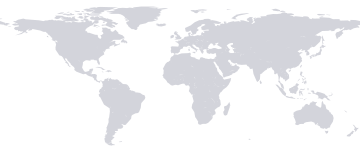
Where is Hachinohe?
Hachinohe sits at 40.5°N, 141.5°E, 20 m above sea level, in Japan. The nearest listed city is Hitokawame, 16 km away.
Topography around Hachinohe
How much the land rises and falls, and what covers it, within 3, 16 and 80 km of Hachinohe.
Within 3 km, the terrain around Hachinohe has only modest variations in elevation — a maximum elevation change of 109 m around an average of 29 m above sea level; within 16 km, large variations in elevation — a maximum elevation change of 887 m; within 80 km, very significant variations in elevation — a maximum elevation change of 1,723 m.
The land around Hachinohe is covered by artificial surfaces (65%) and trees (26%) within 3 km, trees (50%) and water (27%) within 16 km, and trees (59%) and water (33%) within 80 km.
Japan travel facts
- Travel advisory
- Level 1
- Exercise Normal Precautions
- Power plugs
- Type A / B
- 100 V · 50 / 60 Hz
- Prices
- ≈ 65% of US
- price level, 2025
- GDP per capita
- $35,951
- 2025
- Happiness
- 6.1 / 10
- World Happiness, 2025
- Safe drinking water
- 99%
- of population, 2024
- Homicide rate
- 0.2
- per 100k, 2023
- Road deaths
- 3.6
- per 100k/yr, 2019
- Income group
- High
- World Bank
- English
- Very low
- EF EPI 446
- Religion
Sources: World Bank, US State Department, World Happiness Report, WHO/UNICEF, EF EPI, CIA World Factbook.
Data sources
Temperature, precipitation, cloud, humidity, wind and solar figures are a 1991–2020 climatology for Hachinohe (40.5°, 141.5°, elevation 20 m), computed from hourly ERA5 reanalysis — contains modified Copernicus Climate Change Service information. Sun figures are astronomical calculations, not observations. City data © GeoNames, CC BY 4.0. Map outlines from Natural Earth (public domain); interactive map © Google. Tropical-cyclone seasons are the published climatological basin seasons (NOAA National Hurricane Center / regional warning centres). Sea temperatures are the NOAA OISST v2.1 1991–2020 monthly climatology (public domain), sampled at the nearest ocean point. UV index is derived from CAMS (Copernicus Atmosphere Monitoring Service) clear-sky UV data — contains modified Copernicus Atmosphere Monitoring Service information. Monthly air-quality (PM2.5) seasonality is from the CAMS EAC4 reanalysis (Copernicus Atmosphere Monitoring Service), scaled to the WHO annual mean where available. Topography is sampled from the Copernicus DEM GLO-90 elevation model (© ESA/Airbus) and ESA WorldCover 2021 land cover (CC BY 4.0).